The Devil's Music
A Catholic Dad's Reflections on Ozzy Osbourne

Childhood Curiosity and Allure of Heavy Metal
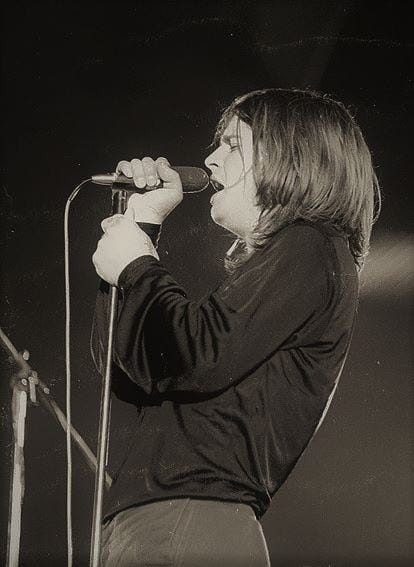
The death of John Michael “Ozzy” Osbourne on July 22, 2025, brought back memories of my rebellious childhood. The 1986 movie, Trick or Treat, about an outcast metalhead who revives a deceased satanic metal singer by playing his albums backwards, captivated me. I loved horror movies growing up, and I kind of still do, and that movie sparked my interest in satanic rock. I just thought it was cool! I was only seven; I didn’t know which way was up! So, I began to ask my dad questions about this stuff. He told me the movie was probably based on Ozzy Osbourne and that Ozzy was regarded as this evil heavy metal star. So, of course, I asked for an album.
Early Exposure to Ozzy Osbourne
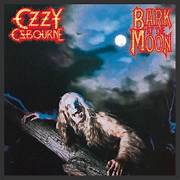
Unfortunately, my father didn’t see any harm in allowing me to listen to this kind of music, and he bought the Bark at the Moon album from 1983. After I listened to this album, I, of course, wanted more. I talked my dad into buying the 1981 album Diary of a Madman, which had a demonic-looking Ozzy staring straight ahead with an inverted cross hanging on the wall of what looks like a dungeon.
Discovering Black Sabbath and the Diabolus in Musica
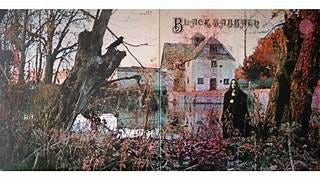
I just thought it was all so cool! I continued to be a fan of his on and off throughout my childhood and later discovered his group Black Sabbath when I was in junior high. I couldn’t help but notice that the quality of musicianship was better with Sabbath. I also couldn’t help but notice that Sabbath had a more demonic sound.
The tritone—long known as diabolus in musica—has a chilling reputation in music history. “As its Latin moniker suggests, it’s an evil-sounding combination of notes that’s designed to create a chilling or foreboding atmosphere… Tony Iommi, who played it in the song ‘Black Sabbath’ from the band’s 1970 self-titled debut album, was untrained in music theory but devised the now-iconic three-note passage after listening to Gustav Holst’s ‘Mars, The Bringer of War,’ a favorite among him and bassist Geezer Butler.” The Holst composition used a harsh triad that caught Iommi’s ear, so he mimicked the sound on guitar. Liking its unsettling effect, he slowed the passage to a crawl, added a trill from D♭ to D, and applied vibrato to increase the tension. Many consider “Black Sabbath” to be the birth of heavy metal.[^1]
The Spirit of Rebellion and my Father the Enabler
At the time, I did not think there was anything wrong with listening to this music. It sounded really cool to me, but also unsettling. I had a defiant and rebellious spirit, so to me, this was the kind of music I wanted to be associated with.
Again, my father did nothing to discourage me from embracing this kind of music because he saw it as harmless teenage fun. He was of the Baby Boomer generation and a hippie, so who was he to judge what kind of music I listened to?
I would argue now that he was MY FATHER! So, stop allowing me to listen to that satanic garbage! Daddies, don’t let your boys grow up to be satanic metalheads! Not too much to ask, I don’t think, but I digress.
I don’t think my dad thought that it was a real danger because the nation had been told that Christians were just overreacting and needed to stop being sissies. I thought the same way at the time. I wasn’t always a devout Catholic, needless to say. In my home, we were taught that Jesus loves us no matter what we do because “once saved, always saved!” So, that meant that I could enjoy a nice song written to glorify evil and not feel any guilt about it. I was also constantly reassured by the media to ignore these claims by Christians that these allegations were all coming from “Jesus Freaks” who were just too zealous!
“Satanic Panic” or Devil Danger?
This was all “Satanic Panic.” “The Satanic Panic was a widespread moral hysteria beginning in the 1980s and continuing into the 1990s, marked by ‘over 12,000 unsubstantiated cases of Satanic ritual abuse (SRA… ritualistic abuse, or sadistic ritual abuse)’ that began in North America and spread globally.”[^2]
There were several claims of satanic rituals occurring while people were being sexually molested but were supposedly debunked later. This could be speculation on my part, but I suspect that in some of these cases, the investigators did not want to believe that this stuff was happening. They believe everything else these kids claimed happened to them during these abuses; why draw the line with satanic rituals being involved? Maybe I’ll explore this in another post.
Media Attempts to Trivialize Satan
What I do know is that this “Satanic Panic” supposedly made its way over to the music scene. USA Today recently attempted to dismiss Christian fears of Ozzy and the devil by insinuating that Christians are just backward and engaging in fearmongering. That Ozzy was using the devil to give “…a theatrical middle finger to hypocrisy and fearmongering. Osbourne lifted up a mirror to a society obsessed with sin, and he laughed. His life reminds us that sometimes, dancing with the devil is really just refusing to march in lockstep with the saints.”[^3]
Culturacolectiva’s Canonization of Ozzy
Culturacolectiva.com made similar assertions, only they went a bit further. They claimed that Ozzy was some traditional Anglican. Sure, he grew up an Anglican, but he was far from being a good little Anglican by the time he hit the rock scene. Culturacolectiva makes the claim that, “Despite his devilish image, Ozzy Osbourne’s relationship with religion was more traditional than many assume. He was raised in the Church of England, prayed before shows, and later admitted that his brief interest in the occult left him disappointed. ‘He never found what he was looking for in the dark arts,’ and the iconic crosses Black Sabbath wore were ‘reportedly to ward off curses fans had allegedly tried to place on them.’”[^4]
Okie dokie, sure could have fooled me. They go on to say, “Ozzy Osbourne didn’t need to sell his soul. He built an empire pretending he had—and the world bought every second of it.”[^4]
Well, if that ain’t sunshine pumping, I don’t know what is.
So, we have one side saying that Ozzy was only using the devil as a means to taunt Christians, and the other side making the claim that he was using the devil as a warning to Christians to not follow him. Right!
From the Horse’s Mouth: Playing with Fire
Let’s get it from the Black Sabbath horse’s mouth, shall we?
In an interview with Gibson TV, Geezer Butler had this to say about the origins of the song “Black Sabbath”: “At the time, I was seriously into cult stuff, black magic, and all that kind of thing. I had this little apartment which I had painted black and had all these upside-down crosses all around the place—pictures of Satan everywhere. And Ozzy brought this book around for me—it was really old, 15th century-like old—and it was all written in Latin. It was all about black magic, had all these drawings of sigils and everything in it. And I just had a really weird feeling about it. That same night, I woke up in the middle of this horrible nightmare, and I just saw this, like, black shape at the bottom of my bed just, like, staring at me. It was like a black malevolent thing—was a horrible feeling of it—and I just totally freaked out. And I told Ozzy about it, and he came up with the lyrics to ‘Black Sabbath.’”[^5]
Well, that sure doesn’t sound like someone who views Satan as a mere symbol to taunt Christians, and it sure doesn’t seem like someone who is warning folks of the devil either. Sounds like a guy who did the old “eff around and find out!” He was playing with fire and got burned.
A Haunted Castle and Bizzare Encounters
Oh, there’s more. Here we have Tony Iommi telling about an experience in a castle in Wales during his time with Black Sabbath: “We rehearsed in this castle once in, err, Wales, it was. We used to rehearse in the dungeons of the castle. One day, we were in this one room; we had a fire, a big fire going. And Ozzy fell asleep on the couch, and we walked out. And anyway, a piece of coal fell out, and POOF, it all caught on fire! And Ozzy managed to get out! And I think later on that day, we saw this—we had walked down this passage, and there was this armory on the right as we walked down. And we saw this figure coming toward us and then go into this armory! We thought, ‘Who’s this guy?!’ And, so we went into this armory, Ozzy and myself. Of course, there was nobody there. The door’s locked from the inside, on the other end. We thought, ‘Well, that—that’s strange!’ And I gotta be honest, we frightened the life out of each other! We had to leave in the end. Everybody terrified of each other! Because we were playing jokes on each other, but nobody knew who was doing it. It just got ridiculous in the end. We used to leave and drive all the way home and then drive back the next day. Was really silly.”[^6]
More Than Symbolism: Real Satanic Influence
Culturacolectiva.com even quoted Ozzy as saying, “He never found what he was looking for in the dark arts,” and the iconic crosses Black Sabbath wore were “reportedly to ward off curses fans had allegedly tried to place on them.”[^4]
So, this wasn’t a band that was merely playing games and using the devil as some rebellious symbol, as we were led to believe. This was a band that was 100% dabbling in the occult and satanic practices. Not so sorry if that offends anyone.
My Reversion to Faith and a New Perspective
I’m happy to say that in my late teens and early 20s, I became a devout Christian, and then in the late 2000s, I reverted back to the Catholic Church that I was baptized into as an infant. I now have a better perspective on this type of music and how Satan can and does use it against Christians. Let’s face it, some of this music is pretty darn catchy.
Led Zeppelin and Mr Crowley’s Influence
Not all the bands were outwardly using satanic content in their music. Take Led Zeppelin, for instance. They had some really cool tunes. “Ramble On,” which we all know I love to do, was cool. “Black Dog” was a jam, and I could go on and on. I found out later that in 1970, Jimmy Page purchased a castle that was used by Aleister Crowley.
Jimmy Page, guitarist of Led Zeppelin, was a collector of Aleister Crowley memorabilia who “had read a lot of Crowley and … was fascinated by his ideas.”[^7] Apparently, Page didn’t spend a whole lot of time in the castle and left it in the care of Malcolm Dent. Dent was skeptical of the paranormal, but that quickly changed when he began taking care of the Boleskine House. …”Dent, reported hearing ‘strange rumblings from the hallway’ that would stop when he investigated and resume once he closed the door. Local lore claimed the sounds came from the disembodied head of Lord Lovat, whose soul was believed to have traveled to Boleskine, the nearest consecrated ground to Errogie, the supposed geographical center of the Highlands. Dent also described the ‘most terrifying night of my life,’ during which he heard snorting and banging outside his bedroom door, only to find nothing there come morning—‘whatever was there was pure evil.’ Another guest claimed she had been attacked by ‘some kind of devil.’ Even recurring poltergeist activity—like slamming doors, shifting chairs, and rolling carpets—didn’t stop Dent from living in the house and eventually raising a family there.”[^7]
The Case Against Rock: Views from Williamson and Childs
People like SSPX Bishop Richard Williamson and even Doctor of Musical Arts Andrew Childs will argue that rock music is of the devil. Bishop Williamson, in an interview with Bernard Janzen, said that rock music is characterized by “the rhythm—the pulsating, monotonous, driving rhythm. It’s not an interesting rhythm; it’s just a pulsating rhythm. And this rhythm speaks to the animal in a human being. It doesn’t speak to his mind. What speaks to the mind is melody. What speaks to the heart is harmony. And what speaks to the animal is rather the rhythm. So music which overemphasizes rhythm at the expense of the harmony and the expense of the melody, which gives rhythm the prominence, is giving to the animal in the human being the prominence. Man is an animal. He’s not only that—he’s a rational animal. But rock addresses primarily the animal, encourages the animal, brings out the animal—and the animal urges—and destruction amongst them. Destruction, violence, uncontrolled by reason, unguided.”[^8]
Dr. Andrew Childs took exception to people making the claims that Beethoven is the grandfather of rock and roll. He said that rock is defined by “a total inversion of technical elements presented without technique.” He further asserted, “There is a supernatural occult element involved in this. Yes, the father of rock and roll is the devil!”[^9] Childs also makes the argument that rock and roll is not evil in and of itself but rather the atmosphere it creates. It’s the frenzy it stirs up in the listener, especially when it is played loud in a crowd.[^9]
Rejecting the Defenders
So, forgive me if I believe what Ozzy, Iommi, Butler, and two musical experts have to say about this type of music. It is important to avoid this type of music altogether. Ozzy wasn’t some saint who was warning us of the dangers of the devil. He wasn’t some trickster who was giving the middle finger to the Western world. He was doing the work of the devil, whether he was aware of it or not.
Godly Music: Best Counter to the Devil’s Tune
So, what is the answer to combating satanic music? Godly music, obviously! Instead of listening to Ozzy, maybe go on YouTube and listen to Vivaldi—anything by Antonio Vivaldi! Listen to Bach’s cello suites or anything by Mozart. And, of course, you can never go wrong with Gregorian Chant. Yes, you can listen to the music of the Mass at home; it’s not a crime. It’s certainly better than listening to “Mr. Crowley”!
I hate to kick a man when he’s six feet under, but Ozzy is not someone we should never revere, and his music is certainly not something that should be listened to. Whether you know it or not, the music does damage to your soul. Heed the warning of Williamson and Childs. This music will incite passions that can lead you into sin.
A Hope for Mercy
Now, I’m not trying to say that Ozzy went to hell. That kind of judgment is above my pay grade. I hope he repented before he died. I really do. I don’t want anyone to go to hell. He was a childhood hero of mine, and I do hope his soul was saved in the end.
Conclusion: The Devil’s Subtle Tactics
Ozzy’s death did more than stir up some nostalgia. What began as a child’s curiosity sparked by a horror movie and some heavy metal records led me down a path that was far darker than I understood. Now that I reflect on the whole matter from a Catholic perspective, I can see how subtle the devil’s influences can be and how easily he can infiltrate through music. The devil rarely comes to us with horns and a pitchfork. Sometimes he comes through distorted amplifiers, wicked intervals, a driving rhythm, and a catchy tune that incites the baser passions and can ultimately lead to sin. Leading us into mortal sin and separation from God is the devil’s actual goal. Rock music just happens to be a crafty way to do it.
It just goes to show that not everything we enjoy is good for us. And while I can appreciate the musical talent behind Sabbath’s riffs or Led Zeppelin’s groovy sound, I can’t ignore the devil’s intentions in making this music. This isn’t some fearmongering; it’s just a warning of a real danger. Today, I choose to fill my life with music that edifies the soul—music that points toward Heaven, not that which drags the soul to hell. Again, I really hope Ozzy’s soul was saved in the end, but his music will not blare in my house anytime soon.
Footnotes
[^1]: Fender. (n.d.). The Devil’s Chord: The Eerie History of Diabolus in Musica. Retrieved from https://www.fender.com/articles/chords/the-devils-chord-the-eerie-history-of-diabolus-in-musica
[^2]: Wikipedia. (n.d.). Satanic Panic. Retrieved from https://en.wikipedia.org/wiki/Satanic_panic
[^3]: USA Today. (2025, July 24). Ozzy Osbourne, Black Sabbath, and Devil Music. Retrieved from https://www.usatoday.com/story/opinion/2025/07/24/ozzy-osbourne-black-sabbath-devil-music/85344473007/
[^4]: Cultura Colectiva. (n.d.). Ozzy Osbourne Didn’t Sell His Soul. Retrieved from https://culturacolectiva.com/en/history/ozzy-osbourne-sell-his-soul/
[^5]: Butler, G. (n.d.). Icons [Interview]. Gibson TV. Retrieved from
[^6]: Iommi, T. (n.d.). Black Sabbath Story Volume 1 [Interview]. Retrieved from
(Timestamp 35:19–36:13)
[^7]: Wikipedia. (n.d.). Boleskine House. Retrieved from https://en.wikipedia.org/wiki/Boleskine_House
[^8]: Williamson, R. (n.d.). Interview with Bernard Janzen. Retrieved from
[^9]: Childs, A. (n.d.). Rock Music and the Occult. Retrieved from
Image Citations
Photo of Ozzy Osbourne, circa 1970. Source: PBS.twimg.com, accessed via Yahoo Image Search.
Ozzy Osbourne – Bark at the Moon (album artwork). Retrieved from: https://static.musictoday.com/store/bands/4199/product_large/Y4CDOZ013.jpg
Black Sabbath – Album Cover (image). Retrieved from: https://cdn.mos.cms.futurecdn.net/oD7KPfQ2CYCsPhzMX9VPsS.jpg
Is this your way of saying you don’t approve of the Insane Clown Posse? 😂 Just jk. Good work 👍🏼
https://g.co/kgs/q75GGTf
I had to post this, because there is a fella who claims that he gave Ozzy a Bible that he could understand.
Ozzy’s son, Jack supposedly said that the Bible this man gave to Ozzy was one of the only gifts he ever kept. He said that Ozzy made sure that everyone who came to visit saw it.
For what that’s worth. Could be some hope for the Oz man after all. How about that